Article
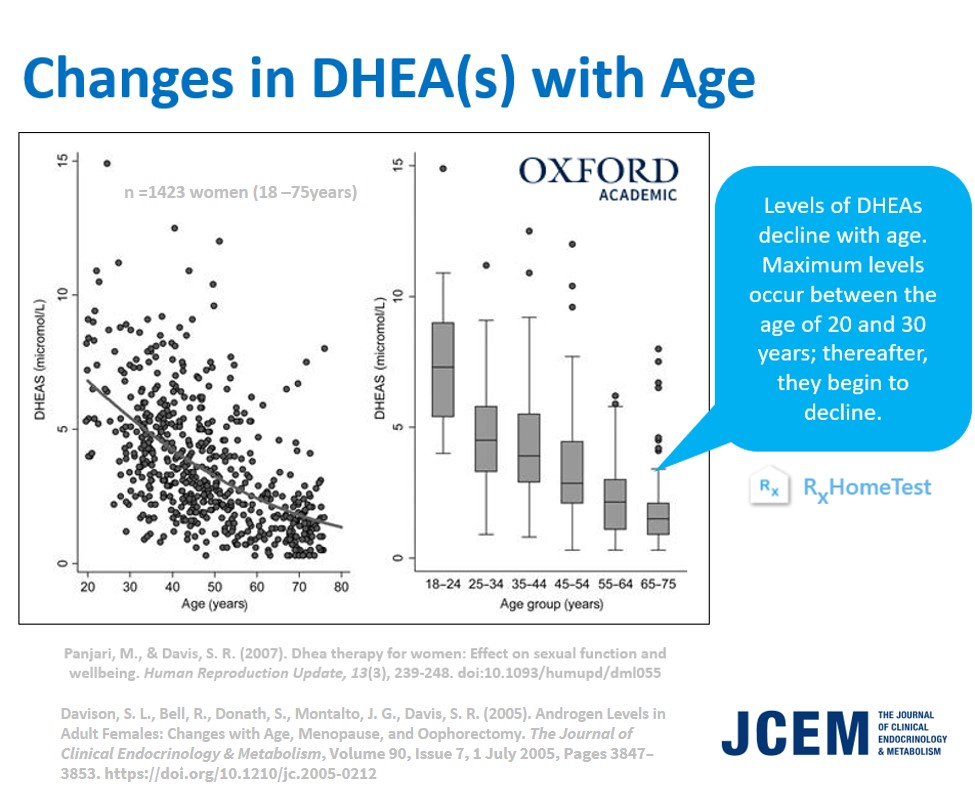
Several important hormones such as testosterone and estrogen are made from DHEA (dehydroepiandrosterone). Often called the youth hormone, as levels peak in our twenties, DHEA has become a popular supplement. It can be easily tested with a saliva sample for adrenal fatigue, mood swings, and hormonal health.
DHEA (dehydroepiandrosterone) is an important marker of biological age, adrenal health and key hormone production, especially androgens and estrogens.
Both DHEA and its sulfated form (DHEAS) are steroid hormones that are abundant in the body.
De-hydro-epi-andro-sterone (DHEA) is a building block for some of the key men's (androgens) and women's (estrogens) hormones.
The sketch below shows how our body converts cholesterol into a cascade of hormones and where DHEA fits into this path.
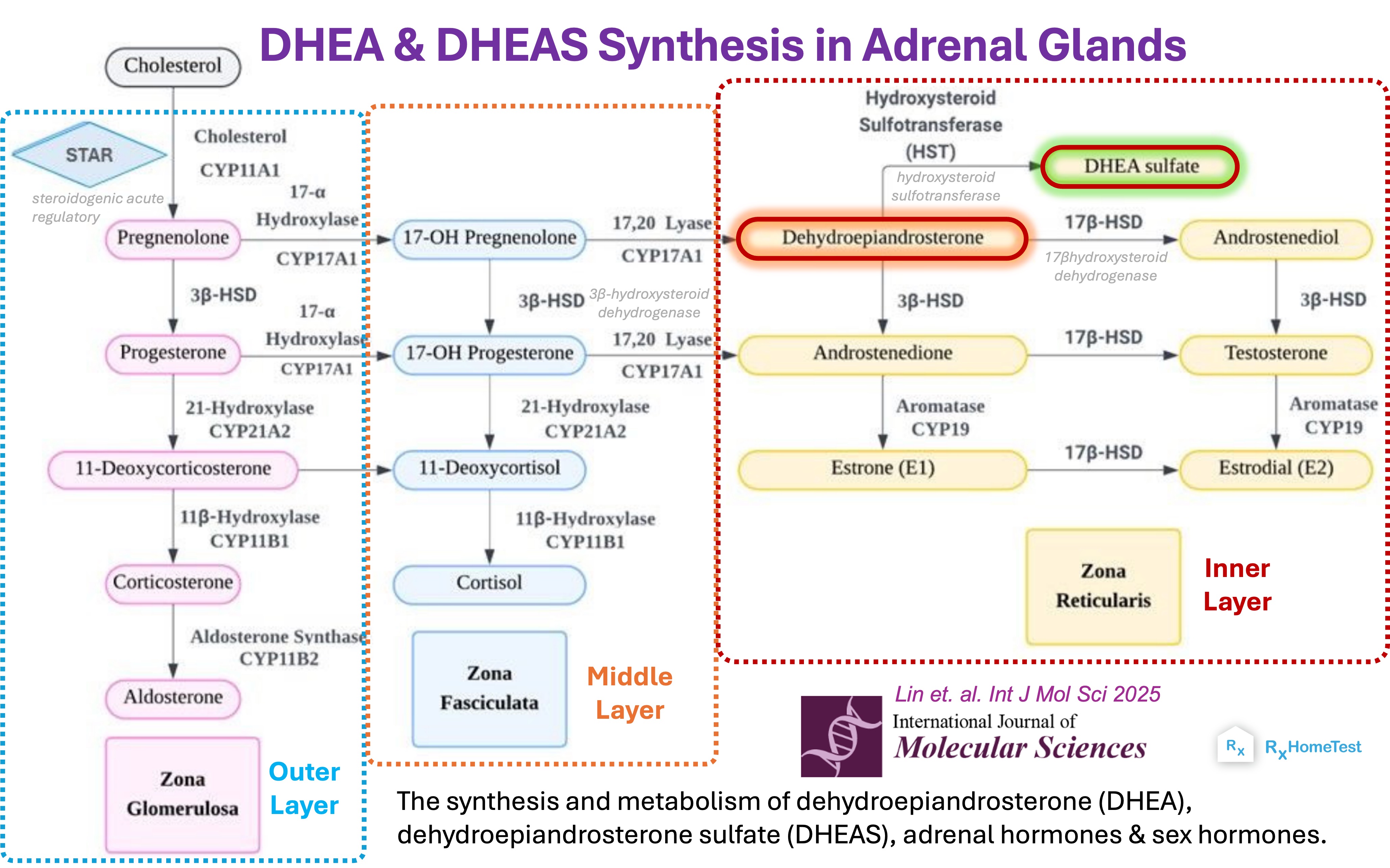
Figure 1: Hormones produced in different layers of adrenal gland, with DHEA & DHEAS synthesis and metabolism highlighted in the inner layer. Reference: Lin, IJMS (2025).
As an active fat soluble form DHEA converts to an inactive water soluble form (DHEAS) by replacing the —OH bond with —OSO3H.
This conversion to inactive form, that's tightly bound to albumin, makes almost all of DHEAS available as a stable reservoir in the blood.
On the other hand, 95% of the active DHEA is only weakly bound to albumin and SHBG (sex-hormone binding globulin), and is quickly cleared by liver and kidneys.
DHEA is a popular supplement, touted as 'anti-aging super hormone'. But, very little data exists on humans to confirm the benefits.
Animal studies, and some early human studies, suggest it can help with physical and mental health, adrenal fatigue, and longer lifespan.
It seems to help with stronger bones and muscles, richer oily skin, anti-inflammatory properties, and better libido, especially helping women reduce vaginal atrophy after menopause.
DHEA is widely available as a supplement. It is mainly extracted from soybean and yam.
Synthetically produced DHEA (dehydroepiandrosterone) is called prasterone and sold as an FDA-approved vaginal insert to restore vaginal tissue (under the brand name Intrarosa).
When testing for DHEA, you will often hear two different forms: DHEA and DHEAS, which can be very confusing.
DHEA is the original hydrophobic form, that converts to a hydrophilic ether form, called DHEAS, by adding sulfur (i.e., converting —OH end of the molecule with —OSO3H).
Some labs test for one, some for the other. However, you will rarely see both as they are easily converted from one form to the other.
Essentially they indicate different test results and their ranges will be marked differently.
A DHEA saliva test gives the active, free DHEA levels at the given moment. A DHEAS blood test checks levels of the stable form indicating the behavior of the total DHEAS reservoir in the body.
Only about 5% of DHEA is available in active form in the blood. Rest is weakly bound with the two proteins, albumin and SHBG (sex-hormone binding hormone).
But DHEAS only binds to albumin, and rather strongly. Which means it's not as easily filtered out by the kidneys and stays much longer (half-life of 10-20 hours).
The inactive but tightly bound DHEAS is available in the blood for much longer. In contrast, the weakly bound DHEA (to albumin and SHBG proteins) is cleared rather quickly (half life of 1-3 hours compared to 10-20 hours).
This is main form that's available in saliva and blood, produced by adrenal glands, brain, and sexual organs (i.e., ovaries and testicles).
It floats freely as it binds weakly to albumin and SHBG proteins. Therefore, it is cleared quickly by the liver and kidneys (within a few minutes).
DHEA has a pulsating release, similar to many other hormones (e.g., TSH, cortisol, etc.). Levels are higher at night than daytime.
That's one reason why it's often measured using a morning sample, especially when measured with saliva.
DHEA measured in saliva is the unbound, biologically active and free form that diffuses into saliva. Salivary DHEA levels are an excellent reflection of the exact amount of active DHEA available in the body at that moment. It's an easy, convenient and non-invasive process in which results that are not affected by the total sulfated DHEAS reservoir or albumin and SHBG levels.
Saliva DHEA is popular for checking adrenal fatigue and chronic stress.
DHEA is fat soluble (as other steroid hormones) and our body produces about 6-8 gm of it everyday.
In a blood test, typical concentration ranges are about 10 to 30 nmol/L. Both men and women have about similar DHEA levels.
This sulfated form is produced from DHEA, exclusively in the liver and (mainly) in adrenal glands.
DHEAS is water soluble stable form that resides longer in the body (half-life of 10-20 hours compared to 1-3 hours for DHEA). It takes almost hundred-times longer for DHEAS to clear from the body.
Our blood DHEAS levels are about half the levels of DHEA: concentration ranges are about 5-9 nmol/L in both men and women (vs 10-3- nmol/L of DHEA).
DHEAS is stable and has no diurnal (daily) trend. It is often tested with a blood sample to reflect the total adrenal capacity of the body, instead of individual organ or at specific time stamp.
Sometimes checking albumin & SHBG levels along with DHEAS can give a more comprehensive picture, if results can't be easily explained with DHEA or DHEAS alone.
Getting Technical
The chemical name of DHEA is 3β-hydroxyandrost-5-en-17-one with the formula C19H28O2.
The active —OH bond in DHEA is converted to an inactive —OSO3H to form DHEAS. It has the chemical name 3β-hydroxyandrost-5-en-17-one 3-sulfate and formula C19H28O5S.
A few important facts about DHEA and DHEAS:
DHEA was first isolated from urine (in 1934) and then from blood (1954). DHEAS was first isolated in 1944.
Human DHEA is mainly released by the adrenal glands while in rodents from gonads, which makes it difficult to apply lab studies to humans.
In postmenopausal women, almost all of DHEA is produced by the adrenal gland; in men, the testicles still produced some throughout the life.
Because of very promising data from animal studies, DHEA is often called a 'super hormone' or an anti-aging agent.
Studies suggest many possibilities from maintaining adequate DHEA levels:
DHEA may improve mental and physical well-being, higher sexual satisfaction and better insulin resistance.
DHEA levels can potentially increase bone mineral density and reduce skin damage as well as body fat.
It acts as anti-inflammatory agent with benefits against allergies, asthma, hypertension, plaque buildup in arteries and heart diseases.
In women, DHEA is known to help with fertility and age-related vaginal atrophy after menopause.
DHEA has been shown to improve symptoms of lupus and inflammatory bowel disease.
DHEA levels in women and men vary depending on age, sex, ethnicity, and BMI.
They also change with everyday activities such as stress, alcohol use, smoking, weight gain, thyroid health, and medication.
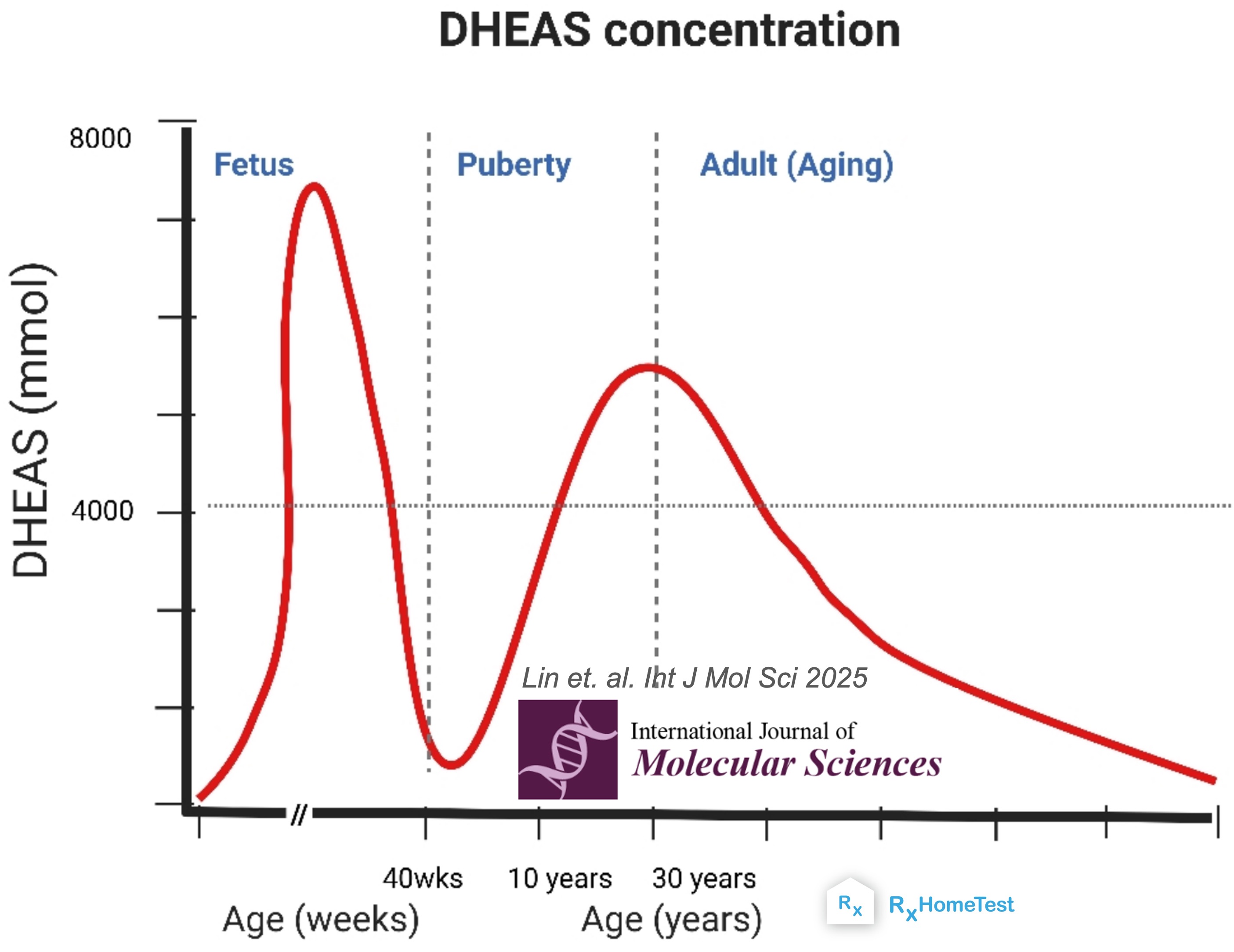
Figure 2: DHEAS hormone levels at different stages of life; initial placenta levels are high but drop after birth and slowly rise until mid-twenties. DHEAS levels in 70s-80s are only about 10-20% of the peak. Reference: Lin, IJMS (2025).
Similar to testosterone, DHEA levels also peak in twenties and decline with age.
As an example, at the age of 70-80 years, levels are only about 10-20% of the peak.
This age-related decline in DHEA follows similar changes in mood, sleep, immunity, atherosclerosis, and cognitive decline.
Therefore, it is a natural question to ask if this decline can be reversed with supplementing DHEA in our diet, instead of relying on the adrenal glands alone.
Many studies in primates and other animals suggest potential benefits from DHEA, e.g., as a possible cure of aging, diabetes, heart diseases, and cancers.
This has led DHEA to be called the 'superhormone', 'mother of all hormones', 'elixir' 'youth hormone', 'fountain of youth', 'longevity hormone', or 'anti-aging hormone'.
However, there's been very limited data to support these claims.
There are some very strong arguments against using animal studies for humans.
For example, mice DHEA is mainly produced in gonads while human DHEA is mainly from adrenal glands (that sit on the kidneys).
Therefore, most results obtained from high DHEA levels in animals are from externally supplemented cases, and not naturally produced by the animals themselves.
Chronic stress and burnout over time can harm the adrenal gland causing them to not produce sufficient DHEA and other hormones.
Studies have shown that low levels of DHEA correlate with early stages of heart diseases and mortality.
Low levels have also been shown to increase the risk of autoimmune diseases such as rheumatoid arthritis (RA), systemic lupus erythematosus (SLE), and Sjögren's syndrome.
These risks in postmenopausal women increase as vaginal DHEA production drops.
A higher cortisol-to-DHEA ratio has also been implicated in depression although many other factors might play a role to draw concrete results.
Certain conditions, such as tumors or Polycystic Ovary Syndrome (PCOS, or with it's new name PMOS, polyendocrine metabolic ovarian syndrome) can result in excessive DHEA levels.
In premenopausal women, high DHEA levels have been shown to increase waist size from weight gain.
Higher DHEA is supposed to increase testosterone levels, which should improve bone density and muscle mass. Although data remain sparse to confirm this proposition.
Similarly, higher DHEA levels are expected to reduce inflammation and improve overall health.
Both DHEA and DHEAS can be tested, however DHEAS testing is more common in larger laboratory and hospital settings.
Saliva DHEA test is simpler, non-invasive method that gives a snapshot of the active DHEA levels at any given time.
While collecting a saliva sample, one should be careful with sample contamination, especially blood from gums that can interfere with results.
Fasting is not required for DHEA testing.
Certain supplements, especially DHEA or biotin (B7) can affect the results and should be listed while returning the sample.
Because results are age dependent, some labs might bucket results into different age groups, but that might not be common. Therefore, one should carefully review the results keeping their age in mind.
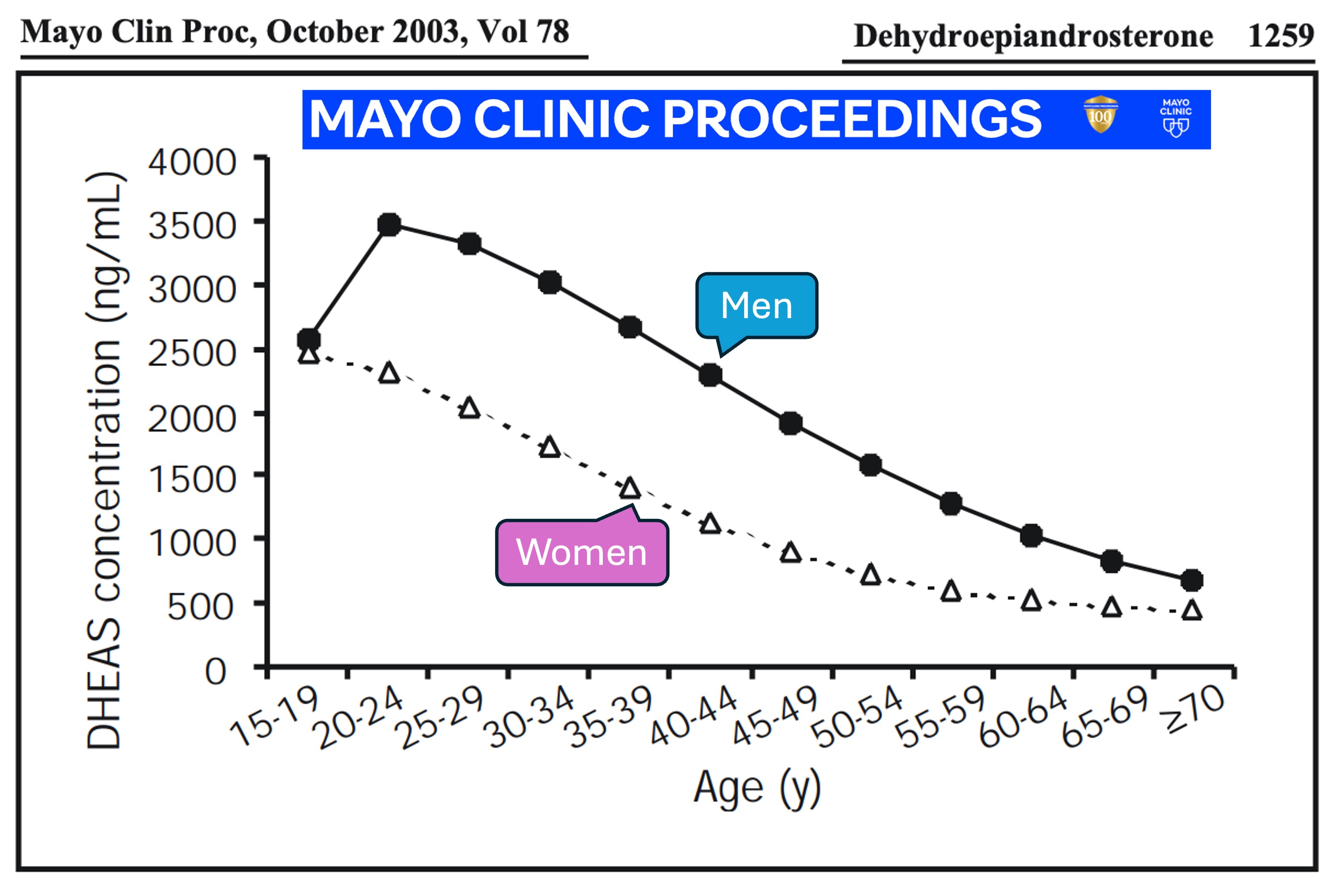
Figure 3: DHEAS levels in men and women after their peak in twenties. Reference: Dhatariya, MCP (2003).
DHEA is one of the key hormones that acts as a precursor to many other critical hormones for men and women.
Levels change with age, and in 70s and 80s, decline to below 20% in the levels in our twenties and thirties.
For postmenopausal women, DHEA plays a key role in aging and hormonal balance, as ovarian production declines.
There are a large number of options available for DHEA supplementation, concrete benefits still require long term studies with large number of participants.
A saliva DHEA test is an easy, simple method of testing DHEA levels and gives a snapshot of active, free form at the given moment.
Normally tested with a morning sample, an adrenal stress test allows combining DHEA test with cortisol levels over a 24-hour period.
A blood test can possibly allow checking DHEAS, albumin and SHBG for additional information.

Order an Adrenal Stress test kit that measures DHEA and 24-hour cortisol.
Why Morning Cortisol and its Collection Time are so Important? - learn why morning levels are crucial.
How Can My Medicine Affect Cortisol Levels? - certain drugs tend to raise or lower normal cortisol levels.
All About Cortisol - a brief summary of the stress hormone.
Cortisol: Risk Factors - key facts and the risks related to high cortisol levels.
Five Telltale Signs of High Cortisol Levels - see the signs before you get tested.
The Most Common Effects of High Cortisol Levels - know what chronic high stress can do to you.
Saliva Testing – Advantages and Concerns - saliva is simple, easy to collect and can be as accurate as blood tests.
All About Testosterone - a comprehensive review of the male hormone.
How to Check Cortisol Levels at Home? - learn about your options to measure cortisol levels.
The Impact of Chronic Stress on Your Body - chronic stress breaks down muscles to build fat & increases weight.
