Men's Hormone Health Test
This comprehensive Men’s Hormone Test measures eight key biomarkers related to men’s hormonal and overall health, using a simple at-home finger-prick blood sample.
Hormones play an important role in energy, muscle and bone health, sexual function, fertility, mood, and overall well-being.
Changes in hormone levels may be associated with symptoms such as persistent fatigue, reduced muscle mass or strength, changes in libido or sexual function, mood changes, and difficulty maintaining healthy body composition.
Testing provides a snapshot of your current hormone levels and may help identify patterns worth discussing with a healthcare professional. When repeated over time, testing can also help track changes associated with age, lifestyle, medications, or other health factors.
This test includes a more comprehensive look at testosterone levels along with several other markers that might influence it (e.g., albumin, SHBG, etc.).
Another option: a Saliva Test with 5 hormones including Testosterone, DHEA, Estradiol, Cortisol (4x).
Our At-Home Men's Hormone Health Test is convenient, reliable, and requires just a few steps:
Order Online.
Receive The Kit And Collect A Finger-Prick Sample At Home.
Ship It Back For FREE* (within US) To Our World-Class CLIA Labs.
Receive Secure, Confidential, & Easy-To-Understand Report Within Days** For Your Comprehensive At-Home Men's Hormone Test.
* Includes free shipping of the kit to Canada & most other countries. Free return shipping of the sample back to the lab is available only within US.
** Please allow sufficient time to receive the kit, return the sample and testing by the lab.
What is a Men's Hormone Test?
The Men’s Hormone Health Test measures key hormones involved in men’s health and well-being.
These hormones influence many important functions, including muscle mass and strength, bone health, body composition, sexual function, fertility, energy, mood, and metabolism.
Hormone levels naturally change with age and can also be influenced by factors such as sleep, stress, weight, exercise, medications, and certain health conditions.
Measuring these levels can provide useful insight into your current hormonal health and help identify changes that may warrant further evaluation.
Regular testing may also be useful for tracking hormone levels over time, particularly as part of healthy aging or when investigating symptoms such as fatigue, changes in libido, reduced strength, or unexplained changes in body composition.
What does the test measure and why?
The test measures four key hormones: TSH, free-T, total T, SHBG, Albumin, DHEA-S, Cortisol, PSA
TSH: thyroid-stimulating hormone helps regulate metabolism, energy levels, body temperature, heart rate, and many other essential body functions. Abnormal TSH levels may indicate an underactive or overactive thyroid and can help determine whether additional thyroid testing is appropriate.
Free Testosterone (Free T): Free testosterone is the small portion of testosterone that is not tightly bound to proteins and is readily available for the body to use. It plays an important role in sexual function, libido, muscle and bone health, energy, mood, and overall well-being. Measuring free testosterone can provide additional insight when total testosterone does not fully explain symptoms.
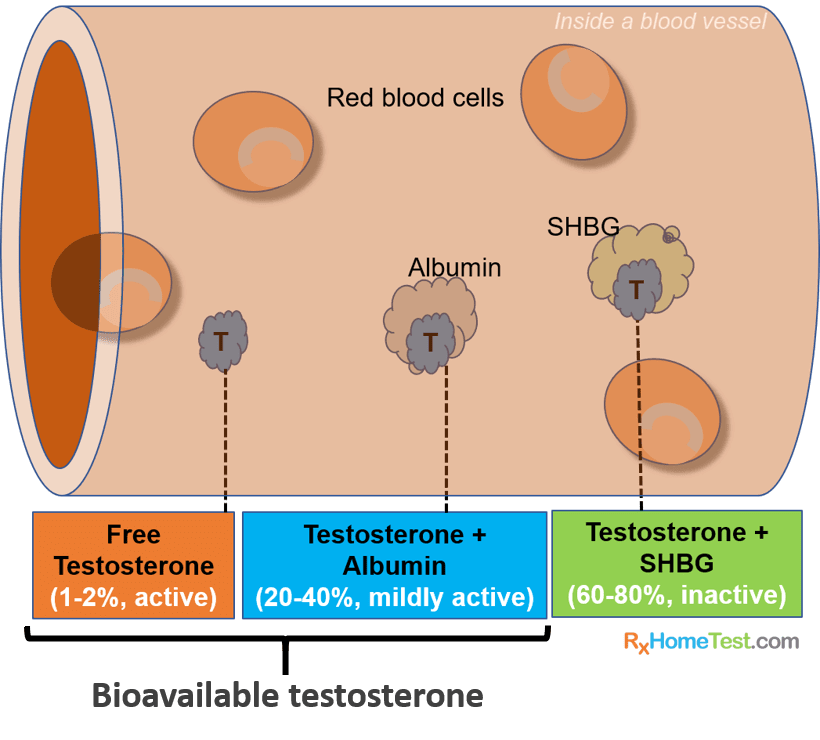
Figure showing the different components that can affect testosterone levels.
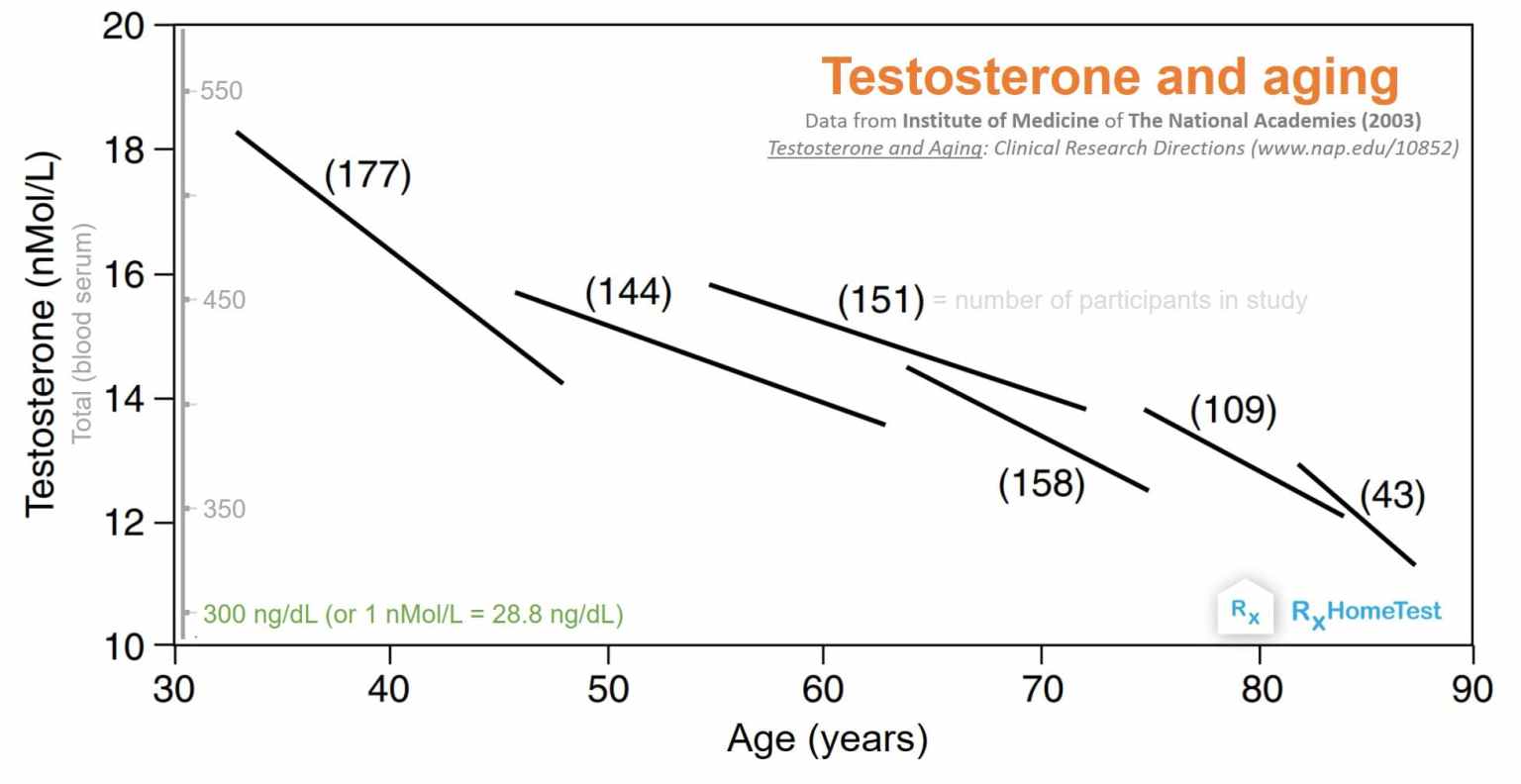
Total Testosterone (Total T): Total testosterone measures the overall amount of testosterone circulating in the blood, including both protein-bound and free testosterone. Testosterone supports sexual and reproductive health, muscle mass and strength, bone density, red blood cell production, mood, and body composition. Levels naturally vary with age after peaking in our twenties.
SHBG (Sex Hormone-Binding Globulin): SHBG is a protein produced primarily by the liver that binds testosterone and other sex hormones in the bloodstream. Because SHBG influences how much testosterone is available to tissues, measuring it alongside total testosterone can provide a more complete picture of testosterone status, particularly when SHBG levels are unusually high or low.
Albumin: Albumin is the most abundant protein in the blood and is produced by the liver. It performs many functions, including transporting hormones and other substances. Testosterone binds relatively loosely to albumin, so albumin measurements can be used with total testosterone and SHBG to estimate bioavailable or calculated free testosterone. Albumin can also provide broader information about nutritional, liver, and kidney health.
DHEA-S (Dehydroepiandrosterone Sulfate): DHEA-S is a hormone produced primarily by the adrenal glands and serves as a precursor for other sex hormones, including testosterone and estrogen. Levels are generally highest in early adulthood and decline with age. Testing DHEA-S can provide information about adrenal androgen production and may be useful when evaluating certain hormonal symptoms or abnormalities.
Cortisol: Cortisol is a steroid hormone produced by the adrenal glands and is an important part of the body's response to stress. It also helps regulate blood sugar, blood pressure, metabolism, inflammation, and the sleep-wake cycle. Cortisol levels naturally change throughout the day, so the time of sample collection is important when interpreting results.
PSA (Prostate-Specific Antigen): PSA is a protein produced primarily by cells of the prostate gland. Measuring PSA in the blood can help assess prostate health and is commonly used as part of prostate cancer screening and monitoring. An elevated PSA does not necessarily mean prostate cancer; levels can also increase with benign prostate enlargement, inflammation, infection, age, and other factors. PSA results should therefore be interpreted in the context of age, health history, symptoms, previous PSA results, and other clinical information.
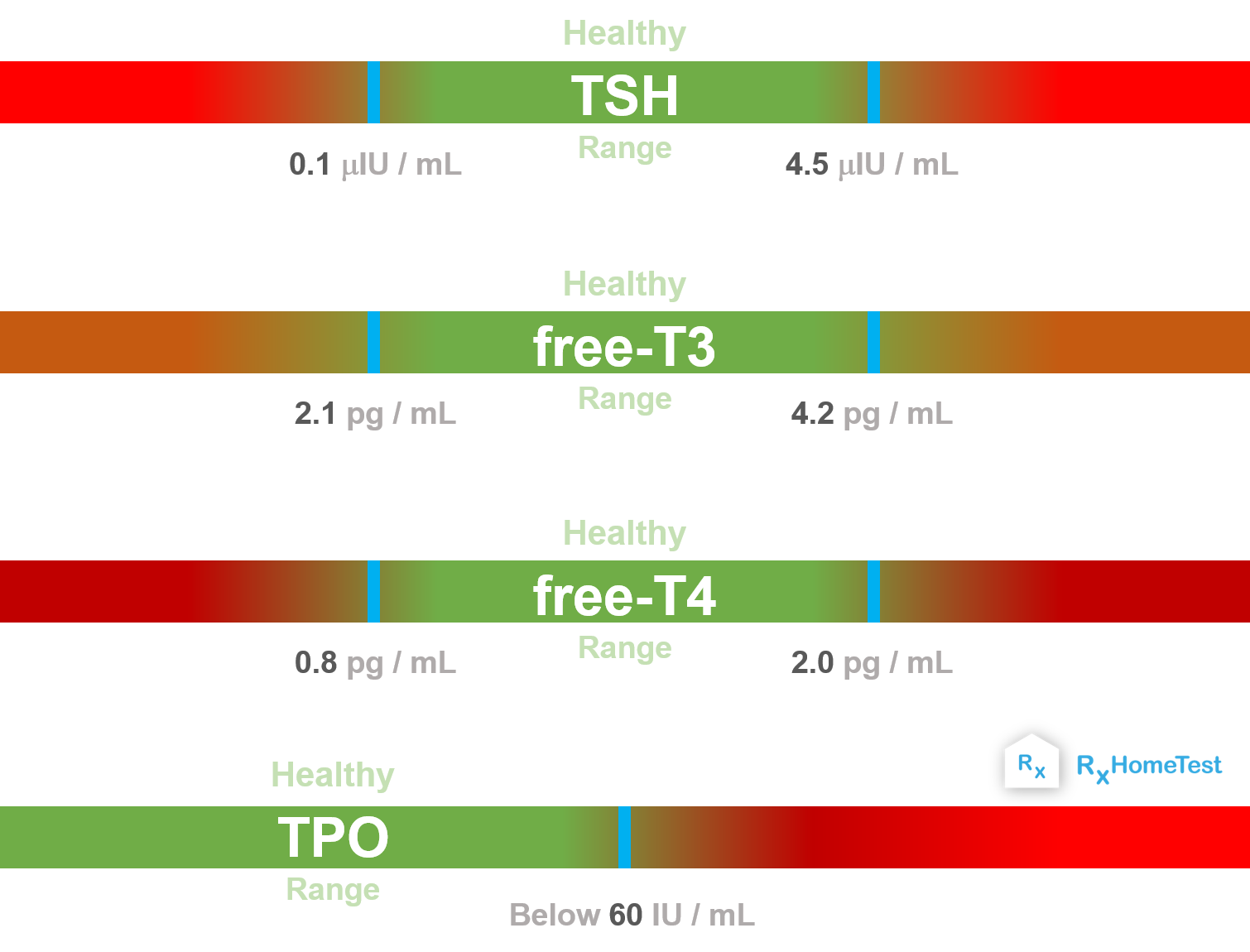
Figure: typical ranges of the different components of a thyroid test. TSH is the most commonly marker checked as a first step.
What are some of the options to get tested for Men's Health?
The easiest low-cost way to get tested for men's health is from the convenience of your home.
We offer several options:
A men's hormone health test - you can check a sample report at this page to see the format and ranges.
A men's health - saliva test - a saliva test that checks Testosterone, DHEA, Estradiol and Cortisol (throughout the day with 4 samples).
Testosterone test - to check free testosterone levels using a morning saliva sample when the levels are highest.
A PSA test - for checking prostate specific antigen.
Simply order a test kit that you prefer, collect a sample at home, mail it to our CLIA-certified labs, and find out your levels in a few days.
Read More
For more information on each of these hormones please see: All About Testosterone, All About Cortisol, Estradiol, All About Thyroid, and DHEA.
Q: Can I purchase the test across US?
A: Except New York our tests are available in all 49 states.
State regulations in NY do not allow us to ship the tests to their residents; therefore they should receive, collect and mail it from an address outside their state.
Q: What does the kit contain and how do I use it?
A: The kit for our at-home Men's Hormone Health Test contains a few lancets, a blood collection card, instructions on how to collect the sample, and a form requesting basic information including date and time of collection.
For orders within US we also include a prepaid return envelope.
Orders outside US will need to be shipped back to the lab in US, but we provide all the necessary paperwork for cross-border shipping.
Q: How long does it take to receive the results?
A: According to USPS, most kits are delivered within 3-5 business days (you can also opt for faster shipping).
After you ship the sample and it is received by our lab, results are normally available within 5-7 business days.
Q: What do I expect from the report?
A: The report with your test results will be easy to understand and will have all the necessary details.
It will mark your hormone levels on a range expected for healthy levels. The report will also specify what are the expected low and high ranges.
It will briefly discuss what your numbers mean and what next steps should be taken to maintain healthy levels.
Q: Can I use my insurance to pay for the test?
A: You can use HSA (or FSA/MSA/HRA) accounts to pay for the tests since these are prescription tests (for further confirmation, please check the IRS publication#969).
However, please ensure you are not going outside your specified max and min deductible limits.
We do not have the capability to process the insurance claim. Since insurance plans vary for individuals we can not guarantee your HSA payment will always be processed by your plan.
We suggest talking to your insurance provider if you have any questions.
Q: How reliable are my results?
A: We have partnered with CLIA-certified labs that are used by physicians across the US.
These labs are regulated by the states, as well as Centers for Medicare and Medicaid Services (CMS).
Majority of the tests from these labs are FDA approved to ensure they meet the proper regulatory requirements.
Additionally, the College of American Pathologists (CAP) requires inter-laboratory tests to ensure the ranges established by each lab do not drift or are not out of acceptable ranges.
This is done by regularly testing reference samples between different labs.
Finally, the labs test thousands of sample for different age groups and health conditions, and have well established reference data to compare your results against this large pool.
Q: Can you recommend what therapy should I take if my levels are low?
A: Unfortunately, no. As a lab test provider we can only test and report out data from your samples.
We are not authorized to provide any medical recommendations.
But we strongly encourage you to discuss the results with your doctor for next steps.