The iron panel helps assess iron deficiency anemia or iron overload.
Iron deficiency is a very common nutritional deficiency, especially among children and women of child bearing age.
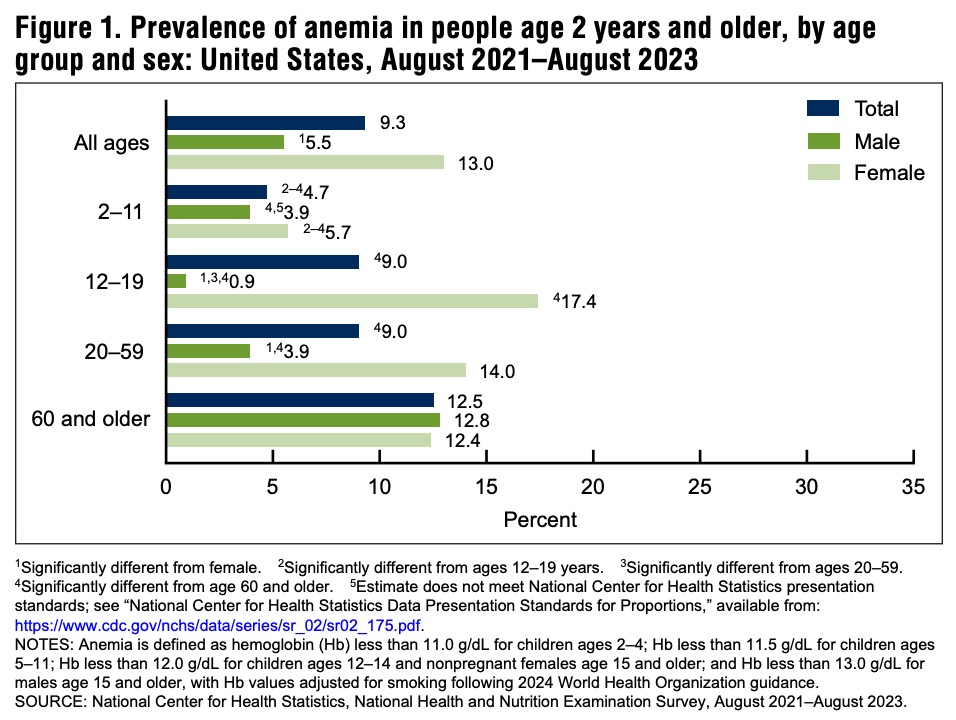
About 1 in 7 women and about 1 in 20 men have iron deficiency as per the CDC.
This iron deficiency test is an at-home anemia test kit that checks for several key markers including ferritin, transferrin saturation, iron, UIBC (unsaturated iron-binding capacity) and TIBC (total iron-binding capacity).
Our Iron Deficiency Test for Anemia is easy, fast, reliable, and requires just a few steps:
Order Online.
Receive The Kit And Collect Sample At Home.
Ship It Back For FREE To Our World-Class CLIA Labs (US only).
Receive Secure, Confidential, & Easy-To-Understand Report Within Days For Your Comprehensive Iron, Ferritin, Transferrin & UIBC Test Kit.
Iron is part of the hemoglobin (Hb) molecule that carries oxygen from the lungs to rest of the body.
It gives the distinct red color to red-blood cells (RBCs).
Most of the iron in adults comes from recycling of RBCs, but children might require up to 30% of their iron from external sources.
Therefore, lack of iron among children can be high without an iron-rich diet, thus causing anemia.
About 1 mg of iron is lost daily through stool, skin, mucous and internal GI bleeding.
Women also lose about 0.3-0.5 mg of iron daily due to menstrual bleeding. And they may need up to 3 mg iron everyday during pregnancy and birth.
Other common causes of iron deficiency are blood donation, peptic ulcers, inflammatory bowel syndrome, certain food sensitivities, and other conditions that damage the gut lining (hookworm infections, bowel cancers, etc.)
Also, diets low in iron or non-heme form of iron that's not easily absorbable by the body, and certain health conditions (e.g., gastric surgery, malabsorption) may also cause anemia despite adequate supplementation.
According to CDC, women are twice more likely to have anemia compared to men.
The test measures following markers:
Iron: The total amount of iron circulating in the blood.
Ferritin The protein that stores the iron in the body.
UIBC (unsaturated iron-binding capacity): the portion of transferrin protein that's not yet bound and available to load iron.
Transferrin saturation: The portion of transferrin that is actually bound with iron. This is a calculated value.
TIBC (total iron-binding capacity): The ability to bind and carry iron in the blood. This is also a calculated value. Pregnancy and use of oral contraceptives may raise TIBC values. On the other hand, lower TIBC values are seen with inflammation, chronic infection, liver disease, malnutrition, and certain malignancies and disorders.
Excess iron absorption due to certain conditions such as hemochromatosis can cause iron overload.
It can lead to excessive storage of iron causing tissue and organ damage.
Untreated iron overload has serious consequences over time, including mortality and onset of diseases such as diabetes, cirrhosis, cardiomyopathy, hepatomas (liver cancer); these often occur at ages 40 to 60 years.
Repeat testing for transferrin saturation is recommended to confirm iron overload. Once confirmed, it may require regular repeated blood draws to reduce the excess iron.
Among pregnant women, excessive iron can lead to hypertension and complications with pregnancy including low birthweight, preterm delivery, slow fetal growth, etc.
Those permanently living over 3,000 ft and smokers also tend to have higher iron levels, but might not require any intervention.
Adolescent girls and women of childbearing age are at higher risk of iron deficiency anemia (at 17.5%, see chart above).
Although blood loss from menstruation is one of the main reasons, even pregnant women might be anemic due to extra iron needed for child's growth, blood loss during pregnancy or in case of twin births.
During first and second trimesters, the total blood volume increases, which causes drop in iron levels. Therefore, second and third trimesters often require additional supplementation up to 5 mg/day.
Risk of iron deficiency might be higher in low income, vegetarian and vegan families since meat is one of the key sources of iron in regular diet.
Use of intrauterine device (IUD) often may lead to lower iron levels, as they may cause heavy bleeding. However, oral contraceptives tend to reduce the risk of iron deficiency.
Heme iron is mainly found in meat, fish, and poultry.
Non-heme iron comes from plants and fortified foods but it's two to three times less absorbable.
Typical iron absorption in the body is about 6% in men and 13% in women (the body absorbs more in a woman due to her extra requirement).
However, certain foods such as Vitamin C can increase iron absorption.
On the other hand, foods such as polyphenols in certain vegetables, tannins (in tea), phytates (in bran) and calcium (in milk) can reduce the body's ability to absorb iron.
A carefully planned combination of these enhancers can help maintain adequate iron levels even in vegetarian and vegan diets.
The easiest low-cost way to get tested for anemia is from the convenience of your home. Simply order an iron deficiency test kit, collect a few drops of blood with an easy finger prick and send your sample to our CLIA-certified labs, and find out your levels in few days.
For a detailed description of iron and it's role in our body, you can read the CDC report here.
More data on anemia are available from FastStats.
A: Except New York and New Jersey, our tests are available in all 48 states. State regulations in NY, NJ, do not allow us to ship the tests to their residents.
A: The kit for our at-home iron deficiency test contains a blood card to collect few drops of blood, a pair of safety lancets for finger prick, instructions on how to collect the sample, and a form requesting basic information including date and time of collection. The directions are straight forward and easy to follow.
A: You will receive the kit in about 3-5 business days in most cases, with a prepaid return envelope. After you ship the sample and it is received by our lab, in most cases you get the results in about 5 business days.
A: The report with your test results will be easy to understand and will have all the necessary details. It will mark your levels for iron, ferritin, TIBC, UIBC and transferrin saturation on a range expected for healthy levels. The report will also specify what are the expected low and high ranges. It will briefly discuss what your numbers mean and what next steps should be taken to maintain healthy levels.
A: You can use HSA (or FSA/MSA/HRA) accounts to pay for the tests since these are prescription tests (for further confirmation, please check the IRS publication#969). However, please ensure you are not going outside your specified max and min deductible limits. We do not have the capability to process the insurance claim. Insurance plans vary by individuals, therefore we can not guarantee your HSA payment will always be processed by your plan. Please talk to your insurance provider if you have any further concerns.
A: We have partnered with CLIA-certified labs that are used by physicians across the US. These labs are regulated by the states, as well as Centers for Medicare and Medicaid Services (CMS). Majority of the tests from these labs are FDA approved to ensure they meet the proper regulatory requirements. Additionally, the College of American Pathologists (CAP) requires inter-laboratory tests to ensure the ranges established by each lab do not drift or are not out of acceptable ranges. This is done by regularly testing reference samples between different labs. Finally, the labs test thousands of sample for different age groups and health conditions, and have well established reference data to compare your results against this large pool.
A: Unfortunately, no. As a lab test provider we can only test and report out data from your samples. We are not authorized to provide any medical recommendations. But we strongly encourage you to discuss the results with your doctor for next steps.
A Comprehensive Iron Deficiency Test for Ferritin and Iron ordered from home can help check your iron levels and assess whether you need to make any dietary changes for healthy levels.
At-home anemia test from RxHomeTest.com can help you understand potential health risks arising from any lack of iron in the diet or changes in your health.
High levels of iron are known risk factors for the onset of several health conditions and iron overload should be carefully monitored and treated.
An at-home ferritin test can help you assess your levels right from the comfort of your home.
Iron levels change significantly during pregnancy and an at-home iron deficiency test can be great way to monitor your levels and plan for healthy outcomes.
7 reasons to order an at-home iron deficiency test kit from RxHomeTest.com:
No lab visits or doctor appointments
Dry blood test (needs just few drops with a finger prick)
World class CLIA-certified labs
Physician reviewed results
Fast, secure, and confidential reports
Free shipping
Qualifies for payment using HSA/FSA
Still wondering where to get an anemia test?
An at-home iron profile test from RxHomeTest.com includes a physician’s prescription and review of the final results. All orders include a detailed report with your test results explained clearly in a manner that you can understand.
RxHomeTest.com is one of the best places to get iron levels tested as we process your tests at the same CLIA-Certified labs that other physicians use but no lab or doctor visit is required. So please rest assured that your blood test to check iron and ferritin levels is being processed in a world class lab.
RxHomeTest.com offers one of the best tests for iron deficiency with convenient, confidential, and reliable results at some of the lowest prices in the market.
At-home anemia test is quick and easy, can be ordered online, and doesn’t require a doctor’s visit or prescription. This saves time and money on visits to the doctor and the lab.
The at-home ferritin test ordered at RxHomeTest.com, requires just few drops of blood using a finger-prick (instead of vials of blood taken through venipuncture). The test includes a doctor’s prescription and review,free return shipping (for orders within US), and you get results within a week. For orders outside US, we provide the necessary paperwork for cross-border shipping.